San Antonio Violent Crimes Defense Attorney
Violent crime charges in Texas carry severe penalties including lengthy prison sentences, mandatory minimums, and in some cases lifetime registration requirements. The prosecution brings significant resources to these cases. So does Jim Wheat. Board-certified, former prosecutor, former judge, 30+ years in Bexar County courts.

Texas treats violent crimes as among the most serious offenses in the criminal code. Assault causing bodily injury, aggravated assault with a deadly weapon, robbery, aggravated robbery, and murder charges all carry significant prison exposure, and many carry mandatory minimum sentences that judges have little discretion to reduce.
A conviction for a violent crime creates a permanent record, eliminates firearm rights, and in many cases requires registration with the state. Employment, housing, and professional licensing consequences extend far beyond the prison sentence itself.
Violent crime charges Jim handles in Bexar County include: assault, a Class A misdemeanor carrying up to 1 year in jail; aggravated assault, a second-degree felony carrying 2 to 20 years in prison; family violence and domestic assault, with enhanced penalties and protective order implications; robbery, a second-degree felony carrying 2 to 20 years; aggravated robbery, a first-degree felony carrying 5 to 99 years or life; murder, a first-degree felony carrying 5 to 99 years or life, and capital murder, punishable by life without parole or the death penalty; manslaughter, a second-degree felony carrying 2 to 20 years; sexual assault and aggravated sexual assault; and kidnapping and unlawful restraint.
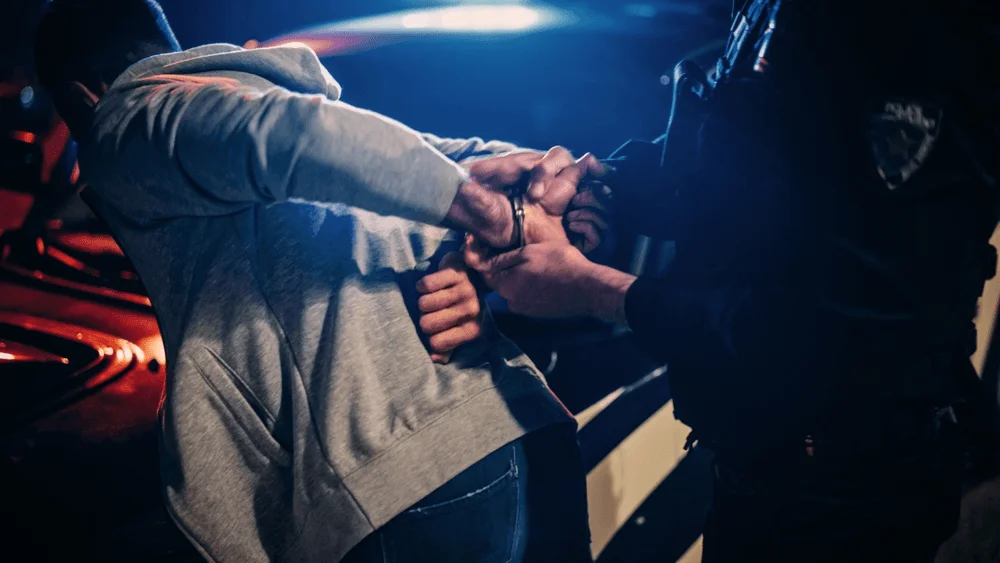

Jim Wheat has defended violent crime cases in Bexar County for more than 30 years. As a former prosecutor, he knows how the state builds these cases and where the evidence is most vulnerable. As a former judge, he understands how courts evaluate credibility, weigh physical evidence, and rule on constitutional challenges.
Forensic evidence in violent crime cases must be properly collected, preserved, and tested. Jim challenges chain of custody, lab procedures, and the interpretation of physical evidence by the state's experts.
Many violent crime cases rest heavily on eyewitness accounts and victim testimony. Jim cross-examines witnesses aggressively, surfaces inconsistencies in prior statements, and challenges identification procedures that produce unreliable results.
Texas law recognizes the right to use force in self-defense, defense of others, and defense of property. Jim evaluates every violent crime case for applicable justification defenses and builds the evidence to support them.
Statements made without proper Miranda warnings, evidence obtained without a valid warrant, and identifications made through improper lineups can all be suppressed. Jim files the motions that remove the state's most damaging evidence.
Violent crime cases move through the Texas criminal justice system on a specific track. Understanding it helps you act strategically from the moment of arrest.

1
After arrest for a violent crime, bail may be set high or denied entirely depending on the charge. Jim appears at the earliest hearing to argue for reasonable bail and begin building the defense immediately.
2
Felony violent crime charges require a grand jury indictment. These cases are heard in the Bexar County district courts at the Cadena-Reeves Justice Center. Jim evaluates the evidence before indictment and, where appropriate, presents information to the grand jury to challenge the charges before they are formally filed.
3
Jim conducts independent investigation, retains expert witnesses where needed, and files pretrial motions to suppress unlawfully obtained evidence. Physical evidence, witness statements, and the circumstances of the arrest are all examined.
4
Violent crime cases frequently go to trial. Jim prepares every case as if it will be tried before a jury. When negotiated resolution serves the client, Jim pursues it from a documented position of strength.
Jim has handled violent crime cases from every angle. As a prosecutor, he built them. As a judge, he evaluated the evidence. As a defense attorney, he has spent more than 30 years dismantling them in Bexar County courts.Read more about Jim's background as a former judge and prosecutor.
Fewer than 1% of Texas attorneys hold this credential. It requires demonstrated experience, peer review, and a rigorous written examination by the Texas Board of Legal Specialization.
Jim spent years prosecuting violent crime cases in Bexar County before switching to defense. He understands how the state builds its case on physical evidence, witness testimony, and forensic analysis, and where each can be challenged.
Serving as a judge gave Jim direct insight into how courts evaluate physical evidence, assess witness credibility, and rule on constitutional challenges in violent crime cases. That perspective informs every argument he makes.
You will not be handed off to a junior associate or paralegal. When you hire Jim Wheat, Jim Wheat is in the courtroom, at the hearing, and on the phone when you call.
Jim retains independent investigators and expert witnesses when the case demands it. Forensic experts, crime scene reconstruction specialists, and medical experts can fundamentally change how a jury evaluates the state's evidence.
Jim has defended violent crime charges in San Antonio courts for more than three decades, from assault cases to murder charges. That depth of experience in these specific courts and before these specific judges matters in cases with this much at stake.
★★★★★
I was charged with aggravated assault and thought I had no options. Jim investigated the case himself, found witnesses the prosecution never talked to, and got the charge dismissed. I would trust no one else with a case like this.
Carlos V., San Antonio
Answers to what most people want to know before calling. If you don't see your question here, call — consultations are free.
(210) 224-9300
Texas law defines violent crimes as offenses involving the use or threat of physical force against another person. This includes assault, aggravated assault, robbery, aggravated robbery, murder, manslaughter, sexual assault, kidnapping, and family violence offenses. The degree of the charge depends on the circumstances and severity of the alleged conduct.
Yes. Violent crime cases can be successfully defended through suppression of illegally obtained evidence, challenges to witness credibility and identification, assertion of self-defense or justification, or by demonstrating that the state cannot prove the elements of the offense beyond a reasonable doubt.
Simple assault in Texas is generally a Class A misdemeanor. Aggravated assault involves causing serious bodily injury or using or exhibiting a deadly weapon, and is typically a second-degree felony. When committed against certain individuals such as public servants or family members, it can elevate to a first-degree felony.
Yes. Many violent crime convictions in Texas carry mandatory minimums that limit judicial discretion. Murder carries a minimum of 5 years. Aggravated robbery carries a minimum of 5 years. Aggravated sexual assault carries a minimum of 5 years. These minimums make early defense intervention critical.
Yes. Texas law provides robust self-defense protections including the Castle Doctrine and Stand Your Ground provisions. Jim evaluates every violent crime case for applicable justification defenses. Where self-defense applies, Jim builds the factual record and legal arguments to support it.
Yes. Jim handles the full range of violent crime charges in Bexar County, including murder, attempted murder, manslaughter, and aggravated assault. Every case receives the same level of preparation and personal attention regardless of the severity of the charge.
When you contact Jim Wheat, here is exactly what happens:
1
Jim listens to what happened, asks about the circumstances of the alleged offense and the arrest, and finds out what evidence the state is relying on.
2
Jim explains what you are facing, what the likely trajectory of the case looks like, and which defense strategies apply to your specific situation.
3
You leave the conversation with a clear picture of your options. No obligation, no pressure, and no charge.